
Opinion
We have audited the financial statements of Zotefoams plc (the "parent company") and its subsidiaries (the "group") for the year ended 31 December 2025, which comprise the consolidated income statement, the consolidated statement of comprehensive income, the consolidated and Company statements of financial position, the consolidated and Company statements of changes in equity, the consolidated and Company statements of cash flows and notes to the financial statements, including significant accounting policies. The financial reporting framework that has been applied in their preparation is applicable law and UK-adopted International Accounting Standards and as regards the parent company financial statements, as applied in accordance with the provisions of the Companies Act 2006.
In our opinion:
- the financial statements give a true and fair view of the state of the Group’s and of the parent company’s affairs as at 31 December 2025 and of the Group’s profit for the year then ended
- the Group financial statements have been properly prepared in accordance with UK-adopted International Accounting Standards
- the parent company financial statements have been properly prepared in accordance with UK-adopted International Accounting Standards and as applied in accordance with the provisions of the Companies Act 2006
- the financial statements have been prepared in accordance with the requirements of the Companies Act 2006.
Basis for opinion
We conducted our audit in accordance with International Standards on Auditing (UK) (ISAs (UK)) and applicable law. Our responsibilities under those standards are further described in the Auditor’s responsibilities for the audit of the financial statements section of our report. We are independent of the Group and parent company in accordance with the ethical requirements that are relevant to our audit of the financial statements in the UK, including the Financial Reporting Council (FRC) Revised Ethical Standard as applied to listed public interest entities, and we have fulfilled our other ethical responsibilities in accordance with these requirements. We believe that the audit evidence we have obtained is sufficient and appropriate to provide a basis for our opinion.
Conclusions relating to going concern
In auditing the financial statements, we have concluded that the Directors’ use of the going concern basis of accounting in the preparation of the financial statements is appropriate. Our evaluation of the Directors’ assessment of the Group’s and parent company’s ability to continue to adopt the going concern basis of accounting included:
- obtaining and documenting an understanding of the Directors’ going concern assessment process, including the controls over the review and approval of the budget and five-year plan
- assessing the appropriateness of the Director’s going concern assessment period to 30 June 2027 and considering the existence of any significant events or conditions beyond this period based on our procedures on the Group’s five-year plan and knowledge arising from other areas of the audit
- evaluating management’s historical forecasting accuracy and the consistency of the going concern assessment with information obtained from other areas of the audit such as our audit procedures on management’s impairment assessments
- testing the assessment, including forecast liquidity, for mathematical accuracy
- agreeing the underlying cash flow projections to management-approved forecasts, recalculating the impact on banking covenants and liquidity headroom for the base case scenario
- assessing whether key assumptions made were reasonable and appropriately severe, in light of the Group’s relevant principal risks and uncertainties and our own independent assessment of those risks
- performing independent sensitivity analysis on management’s key assumptions including applying incremental adverse cash flow sensitivities. The sensitivity analysis included the impact of certain severe but plausible scenarios, evaluated as part of management’s work on the Group’s viability including a reduction in revenue as a result of major operational disruption and increase in cost of inflation
- considering the appropriateness of management’s downside scenario to understand how severe conditions would need to be to breach liquidity, and whether such a reduction in performance has no more than a remote possibility of occurring
- reviewing documentation related to the parent company’s refinancing arrangements, including loan facility agreements, Board approvals and lender correspondence
- assessing the adequacy of forecasted capital expenditure in management’s cash flow projections, specifically in relation to the Vietnam expansion and strategic initiatives, to evaluate whether sufficient funding is available and whether these plans could impact the Group’s ability to continue as a going concern.
Based on the work we have performed, we have not identified any material uncertainties relating to events or conditions that, individually or collectively, may cast significant doubt on the Group’s or parent company's ability to continue as a going concern for a period of at least twelve months from when the financial statements are authorised for issue.
In relation to the entities reporting on how they have applied the UK Corporate Governance Code, we have nothing material to add or draw attention to in relation to the Directors statement in the financial statements about whether the Director’s considered it appropriate to adopt the going concern basis of accounting.
Our responsibilities and the responsibilities of the Directors with respect to going concern are described in the relevant sections of this report.
Our application of materiality
The scope of our audit was influenced by our application of materiality. We set certain quantitative thresholds for materiality. These, together with qualitative considerations, helped us to determine the scope of our audit and the nature, timing and extent of our audit procedures on the individual financial statement line items and disclosures and in evaluating the effect of misstatements, both individually and in aggregate on the financial statements as a whole.
Based on our professional judgement, we determined materiality as follows:
Group financial statements | Parent company financial statements | |||
|---|---|---|---|---|
Overall materiality | £1,023,000 (2024: £700,000) | £587,000 (2024: £665,000) | ||
Performance materiality | £716,000 (2024: £490,000) | £410,500 (2024: £465,000) | ||
Triviality | £51,000 (2024: £35,000) | £29,000 (2024: £35,000) | ||
Basis of materiality | 5% of profit before tax | 5% of profit before tax | ||
Rationale | Profit before tax is the primary key performance indicator used by management in assessing the performance of the Group. As a profit-generating Group and parent company, we consider the users of the financial statements, such as investors, will also consider profit before tax to be a key metric. Based on our assessment indicating minimal risk in the control environment, we have chosen to set performance materiality at 70% (2024: 70%) of the overall materiality, which we deem most appropriate. | |||
Our approach to the audit
As part of designing our audit, we determined materiality and assessed the risk of material misstatement in the financial statements. In particular, we looked at areas involving significant accounting estimates and judgement by the Directors and considered future events that are inherently uncertain such as the impairment of intangible assets, application of acquisition accounting, including the valuation of intangible assets on acquisition, valuation of the Defined Benefit Pension Scheme, including the assumptions used in those calculations, and valuation of deferred tax and share‑based payments. We also addressed the risk of management override of controls, including among other matters, the consideration of whether there was evidence of bias that represented a risk of material misstatement due to fraud.
The Group’s consolidated financial statements for 2025 include nine trading companies, including a joint venture. These comprise one trading company in the UK, two in Europe, two in Asia and three in the USA.
We performed audit procedures of the entire financial statements of the parent company, Zotefoams plc, and its subsidiaries, Zotefoams Inc and Zotefoams Poland Sp. Z o.o.. This work was conducted from our London office by a team with relevant sector experience.
Additionally, we conducted specific scope procedures on the following entities including: Overseas Konstellation Company S.A. and Zotefoams Midwest LLC. For these entities, we performed audit procedures on specific account balances, classes of transactions or disclosures to ensure that all balances material to the Group were subject to appropriate audit procedures.
Our coverage is summarised below by Revenue, Profit after tax and Total assets.
Revenue
Full audit scope 92%
Specified procedures 5%
Out of scope 3%
Profit after tax
Full audit scope 95%
Specified audit procedures 5%
Out of scope 0%
Total assets
Full audit scope 75%
Specified audit procedures 20%
Out of scope 5%
Key audit matters
Key audit matters are those matters that, in our professional judgement, were of most significance in our audit of the financial statements of the current period and include the most significant assessed risks of material misstatement (whether or not due to fraud) we identified, including those which had the greatest effect on: the overall audit strategy, the allocation of resources in the audit; and directing the efforts of the engagement team. These matters were addressed in the context of our audit of the financial statements as a whole, and in forming our opinion thereon, and we do not provide a separate opinion on these matters.
Key audit matter
How our scope addressed this matter
Recoverability of the net investment in and amounts receivable from subsidiaries (parent company only) (Valuation) (Notes 14 and 16)
As at 31 December 2025, the parent company holds investments in subsidiaries with a carrying value of £30,822k (2024: £30,822k) and amounts owed by group undertakings of £59,221k (2024: £35,857k). These balances comprise of both trading and intercompany loan amounts. The trading portion of £4,470k (2024: £14,332k) does not attract interest. Unsecured loans of £54,751k (2024: £21,525k) are interest bearing and the repayment terms are a combination of fixed and on demand. Collectively, these represent a significant proportion of the parent company’s gross assets (2025: 26% (2024: 20%)).
The parent company accounts for investments in subsidiaries at cost less impairment, in accordance with its accounting policy. An impairment review is required under IAS 36 "Impairment of Assets" where indicators of impairment exist, and this involves significant management judgement and estimation. There is a risk of material misstatement if an impairment exists on either the investments or intercompany receivables that has not been recognised, particularly where subsidiaries may not have sufficient financial resources to settle balances or generate future economic benefits.
Our work in this area included:
- comparing the carrying amounts of investments in and receivables from subsidiaries to the respective subsidiaries’ net asset positions as at 31 December 2025
- reviewing management’s assessment for indicators of impairment under IAS 36 and performing an independent assessment to identify any indicators
- assessing the financial health of each subsidiary by reviewing their latest management accounts, cash flow forecasts, and available liquidity to evaluate their ability to repay balances on demand
- evaluating management’s impairment analysis, including consideration of expected credit losses (ECL) under IFRS 9 for intercompany receivables
- reviewing the financial statement disclosures for accuracy and completeness in relation to investments in and balances with subsidiary undertakings.
Key observations
The valuations of the investment in and amounts receivable from subsidiaries are reasonable.
Recoverability of the carrying value of capitalised technology licensing fees related to Shincell (Valuation) (Note 12)
In May 2024, Zotefoams plc entered into a technology licensing agreement with Suzhou Shincell New Materials Co. Ltd (“Shincell”), under which it will pay RMB 80m (approximately £9m) over five years. In return, Zotefoams gains access to Shincell’s proprietary foaming technology, technical know-how, supplier networks and training support, with the right to use the licensed technology for a minimum of ten years. The agreement is a key component of Zotefoams’ strategic plan to maintain and grow its presence in the footwear market, particularly through the establishment of a new production facility in Vietnam.
The group has capitalised the licensing fees as an intangible right of use asset, to be amortised over ten years, reflecting the expected period over which economic benefits will be derived. In accordance with IAS 36, management reviews the ability of intangible assets, including capitalised licence fees, to generate sufficient future economic benefits to recover their carrying value. This assessment requires complex judgements such as management’s view on the long-term footwear midsole market outlook, technology efficiency, policy measures in Asian geographies (Vietnam and South Korea) and consideration of investment and resource potential.
There is a risk that licensing fees capitalised as intangible assets may be overstated if the expected future economic benefits do not exceed the capitalised costs. Additionally, there is a risk of understatement if amortisation begins before the associated benefits are realised, which could result in an impairment that has not been recognised in the financial statements.
Our work in this area included:
- obtaining the licensing agreement to understand key terms, including the rights granted to the group, payment structure and any conditions that may limit access to the technology over the ten-year period
- challenging management over the existence or lack thereof of impairment indicators under IAS 36
- obtaining and reviewing management’s impairment assessment of the ability of the capitalised licence fees to generate sufficient future economic benefits to recover the carrying value
- obtaining an understanding of the basis of preparation of the cash flow forecasts used in the value-in-use model
- reviewing and challenging the key assumptions used in management’s impairment assessment, specifically focusing on:
- projected revenues expected to be generated from the asset over its useful life, including obtaining the forecasts prepared by the Group’s key customer
- the existing and future relationship between Zotefoams and its key customers and the ability to expand to other footwear manufacturers
- expected further capital expenditure required for the expansion into Asia
- the discount rate used in the model, ensuring it appropriately reflects the Group’s risk profile and market conditions
- the useful life of the licence’s asset, assessing whether or not it is reasonable based on expected economic benefits
- growth rate used beyond the five-year forecast
- performing sensitivity analysis on the key assumptions to assess the change in headroom by a reasonable possible change to the inputs, which includes increasing the discount rate by 1%, reducing revenue forecast by 10%, increasing future capital expenditure and delaying revenue generation by one year
- engaging and reviewing the work of our internal valuation team on the appropriateness of the discount rate used by management
- reviewing the historical accuracy of management’s forecasting with regards to the discounted cash flow model
- ensuring the financial statement disclosure is in accordance with the requirements of IFRS16 "Leases".
Key observations
Management’s assessment is reasonable and no impairment is noted.
Application of acquisition accounting including the valuation of intangible assets on acquisition (Valuation, Presentation & Disclosure and Accuracy) (Note 4)
In November 2025, the Group acquired 100% ownership of Overseas Konstellation Company S.A. (OKC) for a total consideration of €36m, including an upfront consideration of €27.6m and €8.4m as deferred and contingent consideration.
Acquisition accounting is inherently complex and involves significant judgement and estimation, including:
- determining the appropriate accounting framework under IFRS 3 "Business Combinations"
- determining the purchase consideration including contingent consideration
- allocating the purchase price and determining the fair value of identifiable assets and liabilities, including calculation of goodwill and other intangible assets
- assessing deferred tax implications arising from fair value adjustments
- estimating the contingent consideration that is based on 2026 forecast performance.
Given the judgemental and complex nature of these transactions, and the material impact of the acquisitions on the Group’s financial statements, we have identified the acquisition accounting as a key audit matter.
Our work in this area included:
- obtaining and reviewing the sale and purchase agreement and supporting documents for the acquisition to understand the key terms, consideration structure, contingent elements and obligations
- obtaining management acquisition accounting model and challenging key management judgements, valuation methodologies and conclusions, including reperforming calculations associated with the key accounting entries
- evaluating the accounting treatment for reasonableness in accordance with the requirements of IFRS 3
- reviewing and testing the purchase price allocation model prepared by management and its expert for appropriateness, including:
- fair value adjustments and assumptions applied
- calculation of goodwill and other intangible assets
- assessing the fair value of deferred and contingent consideration
- assessment of deferred tax on fair value adjustments
- considering the competency of the expert used by management, including qualifications and experience
- evaluating management’s considerations as to the nature of the separately identified intangibles and challenging whether any other intangible assets should have been separately identified
- recalculating the fair value of consideration paid in respect of the acquisition of OKC to determine whether this has been accurately recorded
- obtaining the supporting valuation reports, prepared by management’s expert, of the two properties owned by OKC
- engaging auditor’s experts to assessment of the appropriateness of the valuation methodology used by management, including:
- the methodology adopted for identifying separate intangible assets distinct from goodwill and assess the appropriateness of discount rates and growth rates applied
- the methodology adopted to determine the fair value of land and building acquired
- the appropriateness of the values attributed to the property acquired as part of the acquisition
- performing procedures over OKC’s balance sheets on the acquisition date to ensure transactions are recorded within the correct accounting period and the completeness of accounting adjustments to adjust the trial balances to be compliant with UK-adopted IAS
- assessing the adequacy of the financial statement disclosures, including the accounting policies.
Key observations
The Group’s estimate and assumptions, and the associated disclosures relating to the acquisition of OKC, are reasonable.
Other information
The other information comprises the information included in the annual Report, other than the financial statements and our auditor’s report thereon. The Directors are responsible for the other information contained within the Annual Report. Our opinion on the Group and parent company financial statements does not cover the other information and, except to the extent otherwise explicitly stated in our report, we do not express any form of assurance conclusion thereon. Our responsibility is to read the other information and, in doing so, consider whether the other information is materially inconsistent with the financial statements or our knowledge obtained in the course of the audit, or otherwise appears to be materially misstated. If we identify such material inconsistencies or apparent material misstatements, we are required to determine whether this gives rise to a material misstatement in the financial statements themselves. If, based on the work we have performed, we conclude that there is a material misstatement of this other information, we are required to report that fact.
We have nothing to report in this regard.
Opinions on other matters prescribed by the Companies Act 2006
In our opinion the part of the Directors’ Remuneration report to be audited has been properly prepared in accordance with the Companies Act 2006.
In our opinion, based on the work undertaken in the course of the audit:
- the information given in the Strategic Report and the Directors’ report for the financial year for which the financial statements are prepared is consistent with the financial statements
- the Strategic Report and the Directors’ report have been prepared in accordance with applicable legal requirements.
Matters on which we are required to report by exception
In the light of the knowledge and understanding of the Group and the parent company and their environment obtained in the course of the audit, we have not identified material misstatements in the Strategic Report or the Directors’ report.
We have nothing to report in respect of the following matters in relation to which the Companies Act 2006 requires us to report to you if, in our opinion:
- adequate accounting records have not been kept by the parent company, or returns adequate for our audit have not been received from branches not visited by us
- the parent company financial statements and the part of the Directors’ Remuneration report to be audited are not in agreement with the accounting records and returns
- certain disclosures of Directors’ remuneration specified by law are not made
- we have not received all the information and explanations we require for our audit.
Corporate governance statement
We have reviewed the Directors’ statement in relation to going concern, longer-term viability and that part of the Corporate Governance Statement relating to the Group’s and parent company's compliance with the provisions of the UK Corporate Governance Code specified for our review by the Listing Rules.
Based on the work undertaken as part of our audit, we have concluded that each of the following elements of the Corporate Governance Statement is materially consistent with the financial statements or our knowledge obtained during the audit:
- Directors’ statement with regards the appropriateness of adopting the going concern basis of accounting and any material uncertainties identified is set out in here
- Directors’ explanation as to their assessment of the Group’s prospects, the period this assessment covers and why the period is appropriate is set out in here
- Directors’ statement on whether they have a reasonable expectation that the Group will be able to continue in operation and meet its liabilities is set out in here
- Directors’ statement that they consider the annual report and the financial statements, taken as a whole, to be fair, balanced and understandable is set out in the Statement of Directors' responsibilities
- Board’s confirmation that it has carried out a robust assessment of the emerging and principal risks is set out in the Risk management and principal risks
- the section of the Annual Report that describes the review of effectiveness of risk management and internal control systems is set out in the Corporate Governance
- the section describing the work of the Audit Committee is set out in the Audit Committee report.
Responsibilities of directors
As explained more fully in the Directors’ responsibilities statement, the Directors are responsible for the preparation of the Group and parent company financial statements and for being satisfied that they give a true and fair view, and for such internal control as the Directors determine is necessary to enable the preparation of financial statements that are free from material misstatement, whether due to fraud or error.
In preparing the Group and parent company financial statements, the Directors are responsible for assessing the Group’s and the parent company’s ability to continue as a going concern, disclosing, as applicable, matters related to going concern and using the going concern basis of accounting unless the Directors either intend to liquidate the Group or the parent company or to cease operations, or have no realistic alternative but to do so.
Auditor’s responsibilities for the audit of the financial statements
Our objectives are to obtain reasonable assurance about whether the financial statements as a whole are free from material misstatement, whether due to fraud or error, and to issue an auditor’s report that includes our opinion. Reasonable assurance is a high level of assurance but is not a guarantee that an audit conducted in accordance with ISAs (UK) will always detect a material misstatement when it exists. Misstatements can arise from fraud or error and are considered material if, individually or in the aggregate, they could reasonably be expected to influence the economic decisions of users taken on the basis of these financial statements.
Irregularities, including fraud, are instances of non-compliance with laws and regulations. We design procedures in line with our responsibilities, outlined above, to detect material misstatements in respect of irregularities, including fraud. The extent to which our procedures are capable of detecting irregularities, including fraud is detailed below:
- We obtained an understanding of the Group and parent company and the sector in which they operate to identify laws and regulations that could reasonably be expected to have a direct effect on the financial statements. We obtained our understanding in this regard through discussions with management, industry research, application of cumulative audit knowledge and experience of the sector. We corroborated our enquiries through our review of Board minutes, papers provided to the Audit Committee, correspondence received from regulatory bodies, attendance at all meetings of the Audit Committee, as well as consideration of the results and knowledge gained from our audit procedures across the Group and parent company.
- We determined the principal laws and regulations relevant to the Group and parent company in this regard to be those arising from the Listing Rules, the Companies Act 2006, the Disclosure Guidance and Transparency Rules, the UK Corporate Governance Code, Task Force on Climate-Related Financial Disclosures, environmental, social and governance reporting requirements, UK-adopted IAS, employment law, tax legislations, Bribery Act 2010, the Chemicals (Hazard Information and Packaging for Supply) (Amendment) Regulations 2008, the Institution of Chemical Engineers (Chartered Amendment) Order 2004, the Offshore Chemicals Regulations 2002, the Export and Import of Dangerous Chemicals Regulations 2005, the Industry and Exports (Financial Support) Act 2009, the Export Control Act 2002, the Import and Export Control Act 1990, the Consumer Protection Act 1987, anti-money laundering regulations, the EU Registration, Evaluation, Authorisation and Restriction of Chemicals regulations, the Pressure Systems Safety Regulations 2000, the UK Chemical Industries Association regulations, and the General Data Protection Regulation.
- We designed our audit procedures to ensure the audit team considered whether there were any indications of non-compliance by the Group and parent company with those laws and regulations. The Group and parent company are subject to laws and regulations that directly affect the financial statements, including financial reporting legislation, pensions legislation, distributable profits legislation and taxation legislation, and we assessed the extent of compliance with these laws and regulations as part of our procedures on the related financial statement items.
- In addition, the Group and parent company are subject to many other laws and regulations where the consequences of non-compliance could have a material effect on amounts or disclosures in the financial statements, for instance through the imposition of fines or litigation. We identified the following areas as those most likely to have such an effect: health and safety, various regulations around the handling of chemicals and general environmental protection legislation, fraud, bribery and corruption, export control, the Consumer Rights Act 2015 and employment law recognising the nature of the Group and parent company’s activities. These procedures included, but were not limited to, enquiry of the Directors and other management and inspection of regulatory and legal correspondence.
- We assessed the susceptibility of the Group’s and parent company’s financial statements to material misstatement, including how fraud might occur, by meeting with management and reviewing the risk and uncertainties committee minutes to understand where it is considered there was susceptibility to fraud. We also considered performance targets and their propensity to influence efforts made by management to manage earnings. We considered controls that the Group has established to address risks identified, or that otherwise prevent, deter and detect fraud, and how senior management monitors those programmes and controls.
- As in all of our audits, we addressed the risk of fraud arising from management override of controls by: testing the appropriateness of journal entries and other adjustments; assessing whether the judgements made in making accounting estimates are indicative of a potential bias; and evaluating the business rationale of any significant transactions that are unusual or outside the normal course of business.
Because of the inherent limitations of an audit, there is a risk that we will not detect all irregularities, including those leading to a material misstatement in the financial statements or non-compliance with regulation. This risk increases the more that compliance with a law or regulation is removed from the events and transactions reflected in the financial statements, as we will be less likely to become aware of instances of non-compliance. The risk is also greater regarding irregularities occurring due to fraud rather than error, as fraud involves intentional concealment, forgery, collusion, omission or misrepresentation.
A further description of our responsibilities for the audit of the financial statements is located on the Financial Reporting Council’s website at: www.frc.org.uk/auditorsresponsibilities. This description forms part of our auditor’s report.
Other matters which we are required to address
We were appointed by the Audit Committee on 6 October 2020 to audit the financial statements for the period ending 31 December 2020 and subsequent financial periods. Our total uninterrupted period of engagement is six years, covering the periods ending 31 December 2020 to 31 December 2025.
The non-audit services prohibited by the FRC’s Revised Ethical Standard were not provided to the Group or the parent company and we remain independent of the Group and the parent company in conducting our audit.
Our audit opinion is consistent with the additional report to the Audit Committee.
Use of our report
This report is made solely to the Company’s members, as a body, in accordance with Chapter 3 of Part 16 of the Companies Act 2006. Our audit work has been undertaken so that we might state to the Company’s members those matters we are required to state to them in an auditor’s report and for no other purpose. To the fullest extent permitted by law, we do not accept or assume responsibility to anyone, other than the Company and the Company’s members as a body, for our audit work, for this report, or for the opinions we have formed.
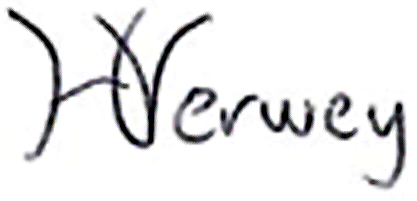
Hannes Verwey
Senior Statutory Auditor
For and on behalf of PKF Littlejohn LLP
Statutory Auditor
10 April 2026
15 Westferry Circus
Canary Wharf
London E14 4HD