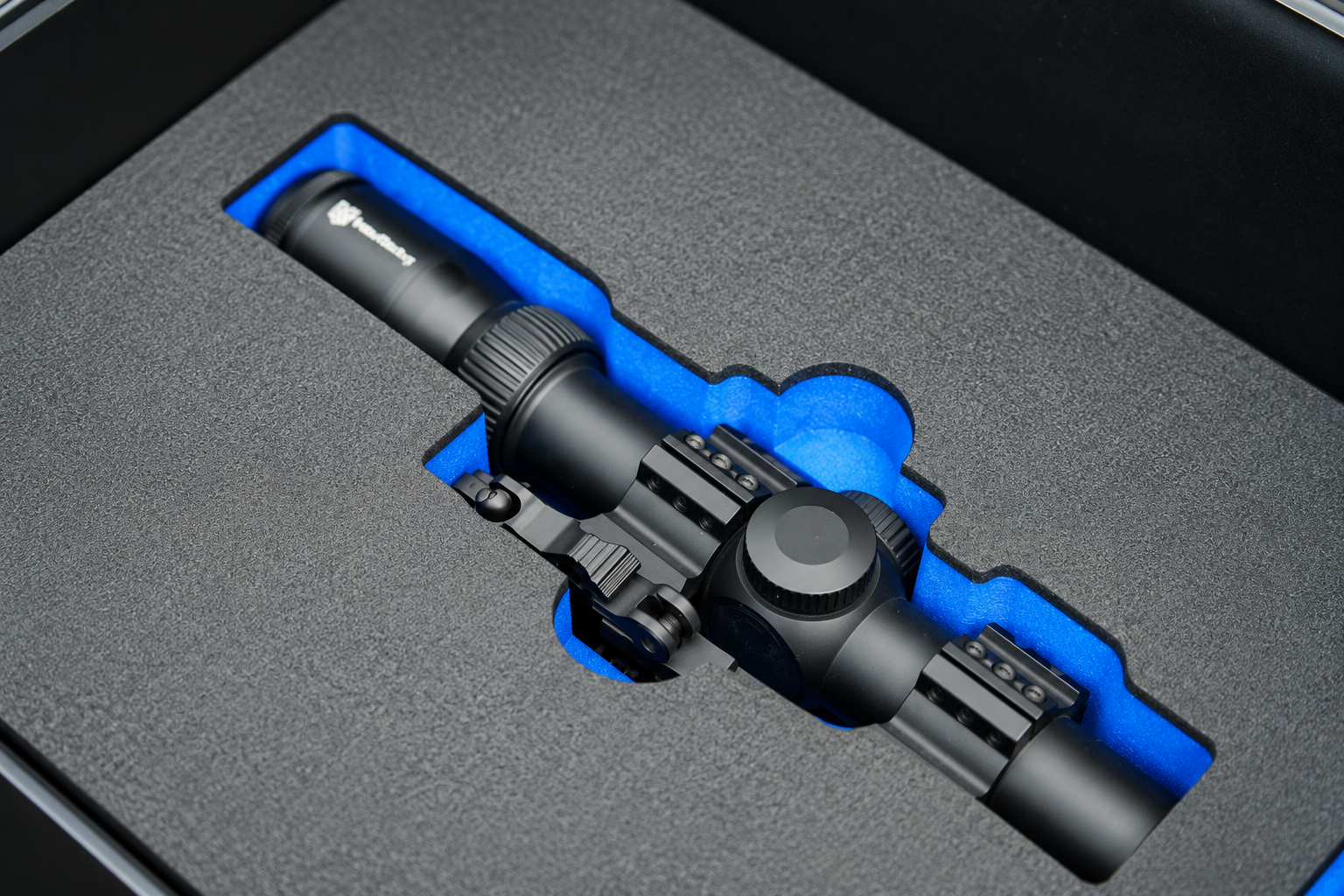

Why choose Zotefoams for military packaging
Low VOC outgassing, low fogging
Proven materials in demanding environments
Precision inserts, produced consistently
Premium appearance, premium protection
Safer handling of static-sensitive equipment
Testimonials
What our customers say
John Waddington, Plant Manager, UFP Technologies
“As a packaging engineer serving the defense industry, I work with some exceptionally precise, mission critical components that require the best protection due to their expense and sensitivity. Some components contain precise optics that must remain clean to function properly. Due to Zotefoams unique manufacturing process that provides foams with extremely low out gasing, we can be confident that their materials will not leave residue on the lens, which would otherwise cause equipment issues. Its durable performance is also well suited for the harsh conditions that these components endure.
Zotefoams is a key material to our success in the defense industry.“
Different applications, different technical requirements
| Application | How foam is used | Relevant material requirements |
|---|---|---|
|
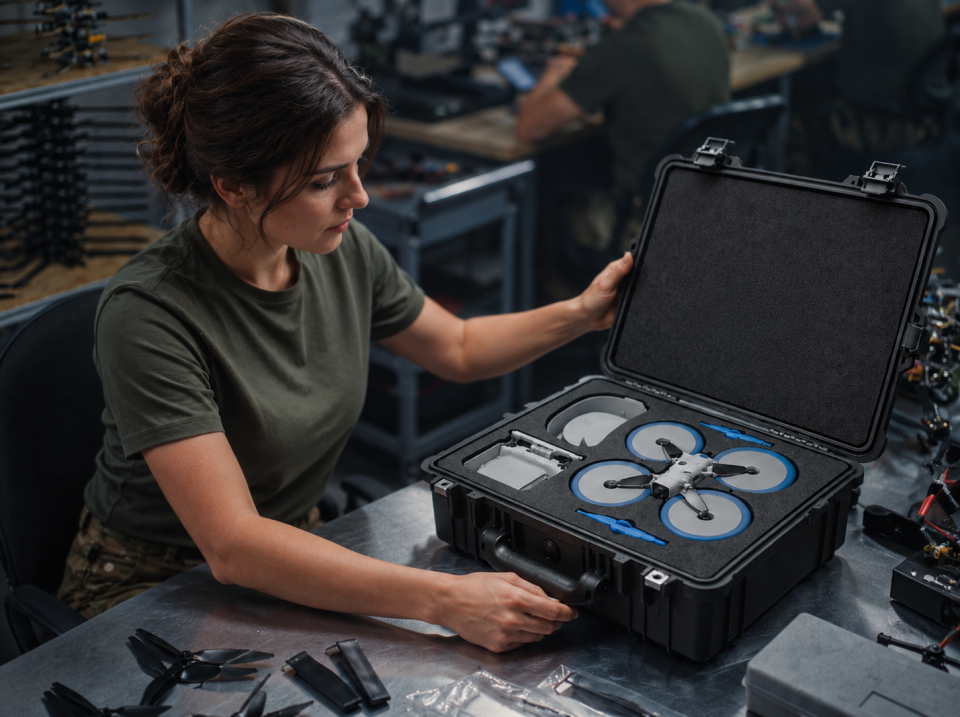
Case InsertsProtect optics, communications equipment, tools, weapons and mission-critical components using precisely fabricated inserts designed for cushioning, locating, blocking and bracing. Request a Quote |
|

|
ESD-sensitive electronicsHelp manage electrostatic charge around radios, sensors, night-vision systems, thermal sights, avionics and other sensitive electronic equipment using selected static-dissipative or conductive grades. Request a Quote |
|
Don’t let fogging compromise sensitive equipment
Not every foam used in protective packaging is suitable for sealed cases containing optics, sensors or electronics. Some materials can release volatile compounds that condense on sensitive surfaces, affecting performance.
Military equipment cases face the same fogging risks seen in automotive interiors: sealed enclosures, temperature changes and critical surfaces that must remain clear, clean and functional.
To help minimise this risk, selected Zotefoams material grades are tested for fogging performance against recognised automotive standards, including DIN 75201, ISO 6452 and SAE J1756, providing added confidence for sensitive equipment applications.

Tech Support
Our Application Engineering team helps reduce specification risk by supporting material selection, insert design, processing and validation. Performance should be assessed as part of the complete packaging system, including the case, insert geometry, payload and expected duty cycle.
Frequently asked questions
Ask ZoteIQ a QuestionDensity is one part of material selection. The design should also consider payload mass, equipment fragility, static loading, shock environment, insert geometry, temperature and the required level of support. Softer grades may be appropriate for cushioning fragile equipment, while higher-density grades can provide blocking and bracing for heavier items.
Selected Plastazote® static-dissipative and conductive grades provide controlled electrical properties alongside cushioning. The appropriate grade depends on the required resistance range, equipment sensitivity, environment and complete packaging design.
Low compression set and resilient cushioning can help inserts retain their fit and protective function through repeated handling. Expected service life depends on grade, loading, temperature, insert geometry and duty cycle.
Yes. Zotefoams materials can be cut, routed, shaped and thermoformed into precision inserts. The design should be validated against the equipment, expected handling conditions and the complete case system.
MIL-STD-810 is normally applied to equipment or packaging systems under defined environmental test conditions. Zotefoams materials can be evaluated as part of a complete packaging design tested against the applicable requirements.
Explore military and defence applications
Explore specialist Zotefoams materials for selected military and defence applications, from protective packaging and communications systems to equipment components.